
by Industrial Meeting
An essential first step is to industrialize sustainability of flexible packaging. By utilizing unique ready-to-use models, cutting down on time and expenses, and selecting from an endless number of combinations of sizes, shapes, materials, closures, and accessories, an experienced partner enables you to design the ideal project.
Why flexible packaging?

Among packaging examples, flexible packaging has inherent qualities of practicality and sustainability. When compared to traditional packaging made of different materials, such as glass or aluminum, the single-material solution is particularly valuable. These comparisons help us understand why sustainable flexible packaging, as a product preservation technology, is becoming more popular.
We spoke with Francesc Busquets, Head of Sales and Marketing at Volpak, on this topic, and he begins by explaining that “there are many factors to take into account when assessing a food product’s sustainability (and not just that, ed), starting with the package’s weight. has an impact on transportation and related expenses, its usefulness (placing a doypack in the bag is more handy than an aluminum can, for example), and the user experience (the package can be opened and closed from time to time for partial use ). Finally, the monomaterial utilized by Volpak may be fully recovered, added to the circular economy, and utilized repeatedly after usage “.
How important are the materials in packaging?

The importance of using sustainable materials in packaging is rising. In addition to its strength and lightness, the flexible single-material packaging is recoverable and recyclable. “It is convenient in comparison to other materials used in the packaging of food goods, not just economically. Both the global population and the transportation of goods are growing. To lessen the negative effects that the shipping of goods has on the environment, packing needs to be lighter”.
Francesc Busquets says, “In addition to the weight of the packages, it is vital to improve their recycling by using suitable materials like the mono-material we use for our flexible packaging”.
Flexible packaging benefits from its low weight and its capacity to be recycled, and the consumer’s perception of pouches has significantly improved. The pouches are lightweight, completely preserve the product they contain, can be resealed for practical use, are recyclable many times, and are cost-effective in both production and transportation“.
Attention to recyclability: single material VS. multimaterials

The entire food industry, including machine manufacturers, food producers, and the manufacturers of packaging materials themselves, must have a truly sustainability of flexible packaging system. Collectively, they are investing a significant amount of effort to convert a very complicated system into a sustainable one.
“Recyclable flexible packaging is popular and will become more popular as it complies to the rules of the circular economy. Previously, flexible packaging was difficult to recycle because it was made with systems comprised of coupled multimaterials that were difficult to separate and recycle properly. Packaging made of various materials created significant complications for the final consumer, who frequently did not separate the various materials that comprised the package in the proper manner. When dealing with a packaging system that has multiple layers that are chemically linked together, it becomes complicated to separate the various films, both for the final consumer and for automated recycling systems. In reality, managing the separation of the various materials for recycling is getting more difficult to the multilayer’s structural composition. Today, we employ monomaterials for our flexible packaging, resulting in a single product that combines the benefits of a monomaterial’s simplicity with the technological advantages of a multilayer“, says Francesc Busquets.
The Pouch Lab to design and test sustainability of flexible packaging

“What have we done to enhance the packaging’s qualities? We established the Pouch Lab, a facility for clients who wish to test the best materials in order to determine the ideal flexible packaging for their goods”, says Mr. Busquets. “At the Pouch Lab, we develop and evaluate the retail packaging. The pouch that a customer selects in a store is the end result of a number of tests and procedures that begin with the food product and involve using the right technology and materials for packaging. Together with the customer, we design and produce the best sustainable packaging in this way. Occasionally, after tests at our Pouch Lab, completely new solutions are developed that the same client frequently did not even know were possible. With a partner who has the resources to create the ideal mix for the food product to be packaged, it is simple to make production sustainable and efficient“.
Flexible packaging is more often used today. We are discussing a modern option that was once viewed as a poor substitute. The perception of the consumer has changed nowadays as a consequence of the new materials and forms. Additionally, due to the peculiarities that distinguish this solution, such as its simplicity in use, ease of opening and closing of the package, its usefulness in storage in the bag, its lightness, and the materials’ capacity to be recycled, have made it popular everywhere.
“It is much more commonly used in the American and Asian continents than in Europe, not only for food products but also for specific products for body care and other applications. In this sense, the Volpak Pouch Lab becomes the ideal asset for the food industry and beyond, which must package its products beginning with the film to be used, analyzing its resistance to create the most appropriate package,” Francesc Busquets continues. “We need to understand that, when used correctly, plastic can be a good solution. We sometimes notice that there is some misunderstanding regarding the packaging materials. The best way to use them must be clearly explained, and it must be understood that using and recycling these materials supports the circular economy“.
Productivity and flexibility: what the market is looking for

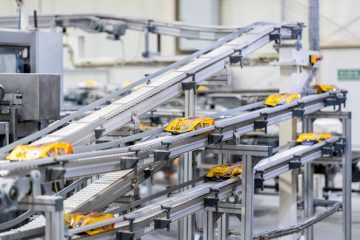
Market demands are divided into two categories: mass production, which requires fast production plants, and small production batches, which demand rapid format change. Obviously, sustainable materials are being used.
“In packing, plant productivity is just as crucial as the material itself. This suggests creating quickly while taking the necessity for significant flexibility into mind. Our machines can pack 2.5 l pouches at a speed of 300 pouches per minute, making them perfect for both big and small batches. You may change the format, the materials, and the configurations easily to quickly select the appropriate packaging for the particular product to be packaged. Flexible packaging is a dynamic world that has developed as a response to new materials that have made it more environmentally friendly. Reverse packaging is a sort of package that may be positioned comfortably in addition to being opened and closed with ease. Who is uninformed of the various formats used nowadays for the packaging of ketchup, mayonnaise, and honey?
The new materials, which enhance the mono-material, give additional possibilities. There are paper-based materials available that work well in some applications, particularly where the barrier effect is not required. The assistance we offer in every situation is to build the project in a way that integrates the technology implemented, the materials, and the various packaging types to be used in accordance with the appropriate application. How do you do it?” Francesc Busquets concludes, “This is what we do“.