

Its scalable systems allow manufacturers to expand processing operations and introduce automation progressively, while addressing evolving food safety, animal welfare and regulatory requirements.
Pork and beef processing in Asian markets is changing. Governments and consumers want safer food and improved animal welfare. Markets such as Vietnam are modernizing, bringing more control to fragmented slaughter practices through licensing and centralization.
At the same time, consumer demand for pork and beef products is increasing through population growth and a rising middle class. For meat processors this is an opportunity to grow domestic sales and, with global trade shifts, expand into exports.
JBT Marel has expanded its portfolio to meet these needs and ensure pork and beef processors across Asia have access to the technology and partnership that will give them a competitive edge, no matter the size of production.
“Our customers can utilize this massive portfolio that goes from no automation to full automation. One of the greatest advantages is that you can put in one machine that increases capacity, or hygiene, or animal welfare, and then when you’re ready add another one,” Nick Adams, Director APAC, JBT Marel.
Manual, automated, robotic, or a combination of the three
JBT Marel’s portfolio’s modular approach to equipment and production lines provides the opportunity to scale without over-investment. You can add automation where and when it earns its place, so technology supports your operation rather than getting in the way. For example, start with a Stun Box, scalding and dehairing system, and a manual splitting saw, and then a robotic M-Line splitting saw later, when production grows.
“Our ability to do combination lines, which allows a customer to add a single robot exactly where it will make the most difference for their specific needs. It can really help our customers stand out from the competition,” said Nick Adams.
One of the biggest benefits of choosing JBT Marel as your technology provider is their global support network. With large spare parts facilities and local service teams on hand to provide preventative maintenance and get lines up and running quickly, you can be confident that your uptime will be maximized.
“The real value shows once the line is running. Our lines are built for low stoppage. Which frees processors up to focus on growing their business rather than the breakdowns,” Breno Basso, Global Product Specialist, JBT Marel.
More than one solution to every challenge
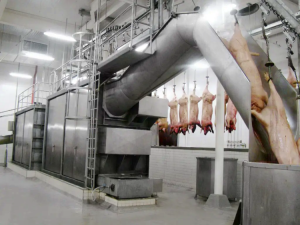
Animal welfare: consumer habits and knowledge have shifted, and there is demand for high-quality meat products that can demonstrate better animal welfare. JBT Marel’s Stunning Box for pigs, and Stunning Box for cattle are designed to facilitate calm handling and effective stunning of animals. By improving animal welfare through reduced stress before slaughter, meat quality also improves, which is an added benefit to processors in a competitive market.
Hygiene: whatever the production capacity, pork and beef processors must meet strict food safety standards that make it easier to manage risks from biosecurity, where diseases such as African Swine Fever (ASF) threaten supply and market access, and food safety, which requires reducing the risk of contamination and the spread of pathogens.
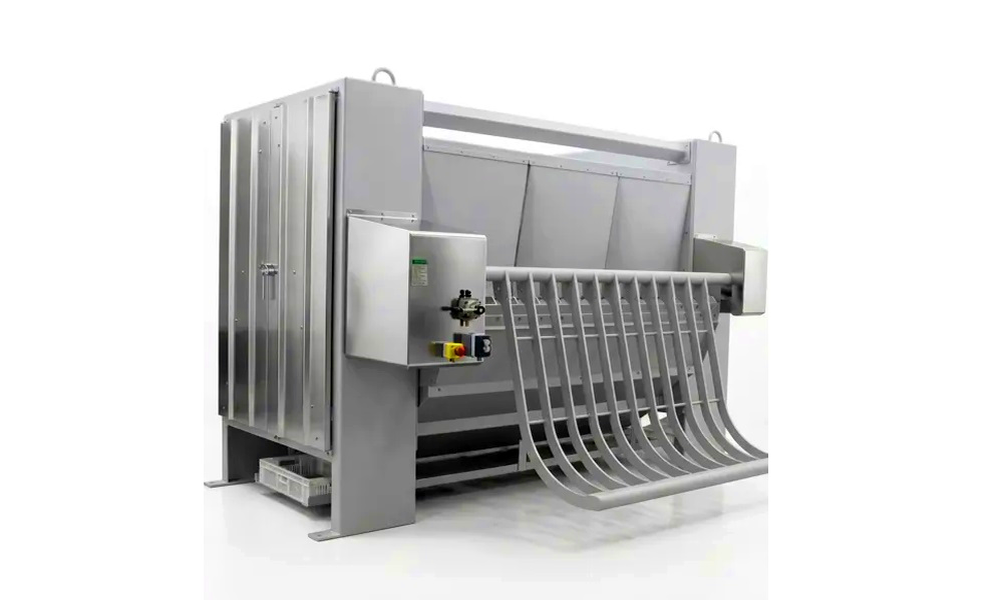
For processors, increasing hygiene standards not only supports licensing and audits; it also improves food safety and product quality; critical in a competitive market. JBT Marel equipment, such as the Rotating table for pig offal evisceration and inspection, and lines are designed with hygiene and cleanability as an essential element.
After working with JBT Marel on their new facility, Ciacarne, a Brazilian pork processor stated, “We wanted ease of cleaning to avoid contamination. The inspectors who visit are always impressed with the project. The facility is impeccable, and we value every detail of that,” José Maria Campos, General Director, Ciacarne.
Labor scarcity
Pork and beef primary processing have traditionally been physically demanding industries, with repetitive movements and heavy lifting that deter some workers and rule out others. Well-designed, ergonomic equipment widens the pool of people who can do the job. JBT Marel’s portfolio offers everything you need to address labor challenges. From flexible transport systems and robotic saws that need minimal human input, to rail conveyors and robust mechanical solutions that work together to minimize the risk of worker injury, and reduce the labor needed. Examples include:
Vertical de-hiders help ensure clean carcasses are kept free from contamination and help protect valuable meat from damage. The Down Puller A3 can dehide up to 180 cattle per hour, reducing labor dependance required for manual dehiding.
More than a machine, it’s a partnership
Each processor has different goals and challenges. Where one processor may process 60 head per hour but need the capacity to grow to 400 head per hour, another may struggle with finding the right labor and be looking to increase automation in deboning; yet another needs an entire new facility to process 40,000 animals a day. JBT Marel understands this, which is why they have expanded their portfolio to cover any sized plant.
Their experts work with to understand the operation, team, and ambitions to design a line or find the right machine to meet the needs. Through partnership, and JBT Marel’s proven portfolio, you can grow production and improve food safety and animal welfare, while capitalizing on market growth.
Ciacarne needed to double production capacity to 300 head per hour, with a strong focus on animal welfare, hygiene standards, and environmental impact. “From conception, JBT Marel was the ideal company. They could provide the equipment with the technology we were looking for; JBT Marel has met 100% of our needs,” José Maria Campos.