


NORD has long-standing experience and in-depth understanding of over 100 industries. The company is a global system provider that provides customized and environmentally friendly drive solutions for every step of the packing process.
Fredriksons, a manufacturer of conveyor systems for the food and beverage industry, benefits not only from the space-saving design, the different speed levels and the integrated multi-protocol Ethernet interface of the NORD drives, but also from the option for variant reduction – both for decentralised and control cabinet solutions. The ability of NORD drives to withstand temperatures down to -30°C makes them particularly advantageous for deep-freeze applications.
High-tech inverters for modern production
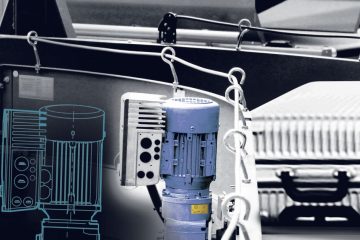
Fredriksons’ chain conveyors for food packaging use IE3 asynchronous motors from NORD with a NORDBLOC.1® helical bevel gear unit combined with the NORDAC ON frequency inverter. The decentralised frequency inverters provide an economical solution for modern production environments. They cover a power range from 0.37 kW to 3.7 kW and are characterised by their full plug-in capability, plug-andplay function, low maintenance and high reliability.
Further features are PLC on board and the integrated Ethernet interface. The PROFINET, EtherNet/IP and EtherCAT protocols can be easily set via parameters. In addition to STO and SS1, the NORDAC ON will soon offer new functional safety features: SLS, SMS and SSM.

For stand-alone solutions, Fredriksons uses the NORDAC PRO SK 500P frequency inverter from NORD. The control cabinet inverter in book-size format is suitable for practically any drive application. Its variants cover a power range from 0.25 to 22 kW while also convincing with its high overload capability. Soon, the inverter will be available with a power extension up to and including 160 kW.
Efficient solutions from our modular range of products
By using NORD products, the Swedish machine manufacturer was able to reduce the number of drive variants in its systems. Thanks to the reduced use of materials and the ideally matched drive components, the TCO and the CO2 footprint can also be reduced.