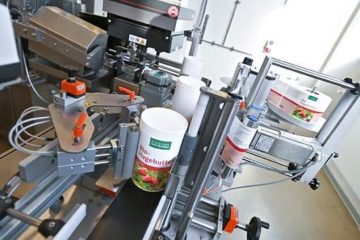



Van Beekum, a renowned name in the Netherlands for high-quality spices, has taken a bold step into spice jar packaging — and selected Greiner Packaging as their trusted partner. The jars and grinders are made of the same material, PET, resulting in a 100% mono-material solution.
This not only simplifies recycling but also aligns with Van Beekum’s sustainability goals. The jars are sold exclusively online via their webshop and in regional supermarkets around Harderwijk, near Amsterdam. With plans to grow and integrate 30% r-PET in future production, this project is a true lighthouse initiative.
Why Van Beekum chose PET for their spice packaging
Choosing the right material for spice jars involves more than just aesthetics — it’s about functionality, sustainability, safety and efficiency. PET offers a number of advantages that make it particularly well-suited for this purpose. The benefits:
- Improved product safety: unlike glass jars, PET spice jars do not shatter when dropped. This not only reduces the risk of injury for consumers during everyday use but also enhances safety in production environments — minimizing hazards for workers and helping maintain a clean, efficient workflow.
- Weight reduction: a 115 ml spice jar made of PET weighs just 20g — an 80% weight reduction compared to a 100g glass jar. This following illustration shows the weight difference between PET and glass packaging for a 115 ml PET container.
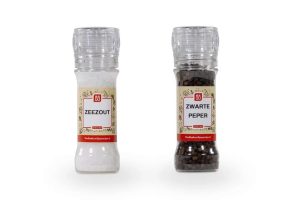
Depending on the percentage of recycled PET used, CO₂ emissions for a 115 ml PET jar can be reduced by up to 50% compared to a jar made from 62.5% recycled glass. With Van Beekum’s plans to include up to 30% r-PET in their spice jars in future production, this already represents a significant reduction in CO₂ emissions.
 This illustration compares the carbon footprint (g CO2e) of spice jars, using different materials: recycled PET (r-PET) at 30%, 50%, and 100% levels, and recycled glass (r-GLASS) at 62.5%. The breakdown shows that packaging made from higher percentages of recycled PET has a lower carbon footprint compared to recycled glass, which has significantly higher emissions due to the combined impact of glass material production and transport.
Made of one material: the Jar and Grinder are made of PET and therefore the perfect mono-material solution, which increases recyclability.